


Isle of Man Hen Harrier Breeding Census 2022
In spring and summer 2022, Manx BirdLife undertook a comprehensive Island-wide census to assess the status of the breeding Hen Harrier (Circus cyaneus).
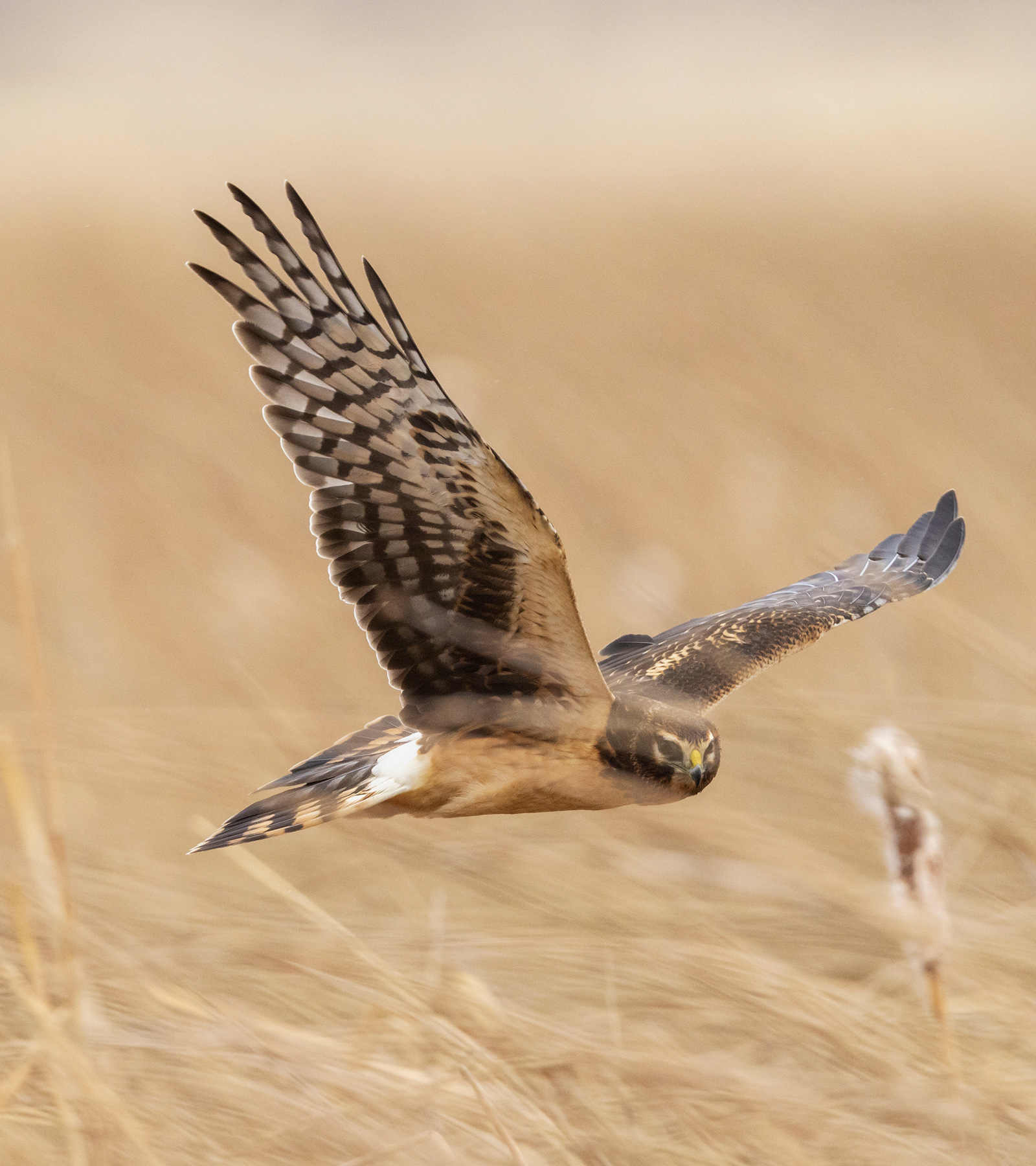
The Hen Harrier (Circus cyaneus) is an iconic bird of prey and one of the most persecuted raptors across Britain and Europe.
While the species has experienced significant declines across much of its range, the Isle of Man remains a crucial refuge, offering relative sanctuary from illegal persecution. Yet, despite this protection, much about the Island’s Hen Harriers remains unknown—particularly their movements outside the breeding season.
Preliminary results from recent genetic studies suggest that the Manx breeding population is unusually insular, showing distinct genetic differences from its British and European counterparts. Nevertheless, juvenile and non-breeding Hen Harriers are known to wander widely, often crossing sea and land before returning to their natal areas to breed.
Survey Methodology and Results
The census took place between 28 March and 5 July 2022. Manx BirdLife’s trained survey team conducted up to three visits to each of 86 known recent and historic nesting sites in the Island’s upland areas. Using standardised observation methods from carefully selected vantage points, the team recorded:
territorial pairs
possible additional pairs
Hen Harriers present but non-breeding at 13 other sites
The total of 38 territorial pairs is the highest recorded since 2004, when the population peaked at 57 pairs. Each identified territory was occupied by a male and a female, although Hen Harriers are known to be polygynous. In fact, among 31 confirmed territories, only 27 individual males were recorded—indicating at least four males were paired with more than one female.

A Broader Context: Hen Harriers in the British Isles
In 2023, a parallel UK-wide census conducted by a coalition of conservation bodies, including the RSPB and national nature agencies, highlighted mixed fortunes for Hen Harriers across the British Isles:
- England recorded 54 breeding attempts by 50 territorial pairs—an impressive 1,150% increase from just four pairs in 2016.
- Scotland remains home to 77% of the UK and Isle of Man’s Hen Harrier population, with an estimated 529 territorial pairs. However, this is still less than a third of the potential capacity based on available habitat.
- Wales reported 40 territorial pairs, over half of which were found within two designated Special Protection Areas (SPAs): Berwyn and Migneint-Arenig-Dduallt.
- Northern Ireland saw a decline, with 34 territorial pairs recorded—a 16% decrease attributed to habitat degradation and continued illegal persecution. This mirrors a similar 33% decline reported in the Republic of Ireland in 2022.


Protecting Hen Harriers
The Hen Harrier is listed under Schedule 1 of the Wildlife Act. All survey work was conducted by Manx BirdLife under special license from the Department of Environment, Food and Agriculture (DEFA).
Please note: During the breeding season, it is a criminal offence to intentionally or recklessly disturb these birds. If you see a Hen Harrier—especially near a suspected nest site—do not approach. Disturbance, even if unintentional, can cause adults to abandon nests or expose chicks to predators.
